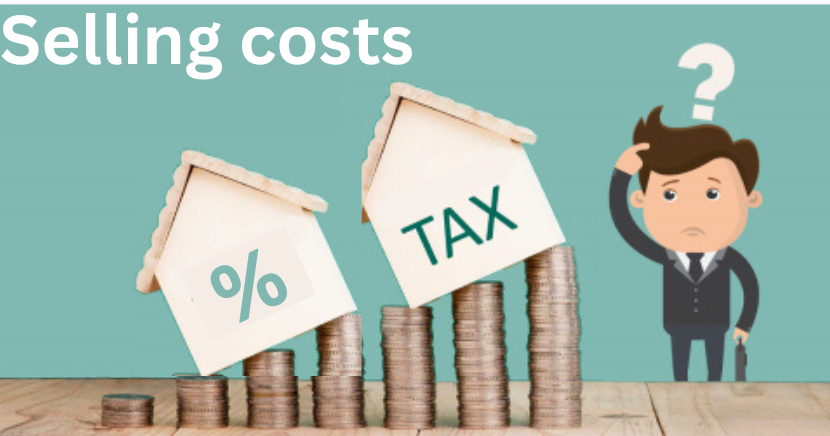
Cuando decide vender su propiedad en España, además de los honorarios de la agencia, es posible que deba pagar los siguientes impuestos
Plusvalía
La plusvalía es un impuesto municipal que se paga al ayuntamiento local y se basa en el incremento del valor oficial del terreno entre la fecha de compra y la fecha de la venta. La plusvalía o impuesto sobre el valor del suelo es el impuesto que se aplica al incremento del valor del suelo urbano una vez que un inmueble es transferido, vendido, heredado o recibido tras una donación.
Este impuesto no se aplica sobre la propiedad en sí, sino sobre el valor del terreno que ocupa. Cuando compraste la propiedad que planeas vender, el terreno en el que se encuentra tenía un valor
X. Ahora que quieres vender este valor del terreno puede haber aumentado (X + aumento de valor). Y ese incremento se debe en parte a las mejoras que ha realizado el ayuntamiento en la zona y su entorno.
Hay más supermercados cerca, mejores infraestructuras, quizás más conexiones de transporte público, etc. Entonces el impuesto de plusvalía es la forma que tiene el ayuntamiento de captar ese incremento de valor que se correlaciona con sus inversiones y mejoras públicas.
Es importante destacar que Plusvalía sólo capta el incremento del valor del suelo urbano. Es decir, si la propiedad está ubicada en el campo, este impuesto será inexistente o muy reducido. Además, es importante mencionar que cuando el vendedor sea no residente fiscal en España, el comprador será responsable de este impuesto. ¿Por qué? Porque si el vendedor es el encargado de pagarlo pero no lo hace (por no estar en España) las autoridades fiscales españolas perseguirán al nuevo propietario. Por esta razón el comprador suele retener el dinero para pagar la Plusvalía en nombre del vendedor, para así garantizar el pago del impuesto.
Impuesto de no residente
Según la Ley española (artículo 25.2 del Real Decreto 5/2004 que regula el Impuesto a No Residentes) si un no residente vende una propiedad en España, el comprador debe retener el 3% del precio de compra e ingresarlo en la Hacienda Pública dentro de un plazo de un mes a nombre del vendedor. Este pago se trata como un pago anticipado de ganancias de capital (ver más abajo).
Si el contribuyente no residente ha sufrido una pérdida o la obligación tributaria es inferior al 3%, deberá solicitar la devolución del exceso.
Ganancias de capital
El impuesto de las ganancias de capital es un impuesto que pagan no residentes y residentes y que se aplica cuando se obtienen beneficios por la venta de un inmueble, es decir, cuando el valor de venta supera el valor de compra. En el caso de los residentes pagarán entre el 19% y el 26% en función del beneficio obtenido y se podrán aplicar algunas de las bonificaciones existentes.
Para los no residentes, el tipo será del 19% para los no residentes de países de la UE/EEE o del 24% para los no residentes de otros países.
El impuesto se basa en el beneficio neto obtenido al vender una propiedad, que se calcula deduciendo el precio de compra original (incluido IVA, tasas de Registro de la Propiedad, impuesto de transferencia de propiedad y honorarios legales y notariales) del precio de venta final (menos los costos incurridos durante la venta).
Existen algunas excepciones y estrategias que se pueden utilizar para evitar pagar el Impuesto sobre las Ganancias de Capital. Por ejemplo, si compra otra casa como su única residencia principal utilizando el dinero de la venta de una propiedad, que también utilizó como su única residencia principal, entonces está legalmente exento de pagar el Impuesto sobre las Ganancias de Capital. Además, si tiene más de 65 años, no está obligado a pagar el impuesto sobre las ganancias de capital, pero debe haber vivido en la propiedad como su única residencia principal durante un mínimo de tres años antes de la venta de su propiedad.
Honorarios de abogados
Le recomendamos que utilice un abogado para que actúe en su nombre en la transacción de venta. Un abogado le ayudará a calcular los costos y se asegurará de que todo sea lo mejor para usted. una vez que hay un comprador. Trabajamos junto con muchos abogados que podemos recomendar.
When you choose to sell your property in Spain apart from the agency fees you might be obliged to pay the following taxes;
Plusvalía Tax
Plusvalía is a municipal tax paid to the local townhall and is based on the increase of the official value of the land between the purchase and sale dates.
The plusvalía or land value tax is the tax applied to the increase of the value of the urban land once a property is transferred, sold, inherited, or received after a donation.
This tax does not apply to the property itself, but to the value of the land it occupies.
When you bought the property you are planning to sell, the land in which it is located on had a value X. Now that you want to sell this value of the land may have increased (X + increase of value). And that increase is in part due to the improvements the town hall has made to the area and its surroundings.
There are more supermarkets nearby, better infrastructures, perhaps more public transport connections, etc.
So the plusvalía tax is the way the town hall has to capture that increase in value that is correlated to their public investments and improvements.
It is important to stress that Plusvalía only captures the increase in urban land value. Meaning that if the property is located in the countryside, this tax will be non existent or very little.
Also, it is important to mention that when the seller is a non-tax resident in Spain, the purchaser will be liable for this tax. Why? Because if the seller is in charge of paying it but fails to do so (because he is not in Spain) the Spanish tax authorities will go after the new owner. For this reason the buyer of the property will retain the money for the Plusvalía to pay on behalf of the seller, to guarantee the tax will be paid.
Non residenttax
According to Spanish Law (article 25.2 of Royal Decree 5/2004 that regulates Non-Resident Tax) if a non-resident sells a property in Spain, the buyer must withhold 3% of the purchase price and deposit it into the Public Treasury within one month in the name of the seller.
This payment is treated as an adva nced payment of capital gains ( see below).
If the non-resident taxpayer has made a loss or the tax liability is less than 3%, he/she will have to apply for a refund of the excess.
Capital Gains
The capital gains tax is a tax paid by non-residents and residents that is applied when benefits are obtained from the sale of a property, that is, when the sale value exceeds the purchase value. In the case of residents, they will pay between 19% and 26% depending on the benefit obtained and some of the existing bonuses may be applied. For non-residents the rate will be 19% for non residents from EU/EEA countries or 24% for non residents from other countries.
The tax is based on the net profit made when selling a property, which is calculated by deducting the original purchase price (including VAT, Land Registry fees, property transfer tax and legal and notary fees) from the final sale price (less costs incurred during the sale).
There are a few exceptions and strategies that can be used to avoid paying Capital Gains Tax. For example, if you purchase another home as your sole, main residence using the proceeds from the sale of a property that you also used as your sole, main residence only then you are legally exempt from paying Capital Gains Tax. Also, if you are over 65 years old then you are not required to pay Capital Gains Tax, but you must have lived in the property as your sole, main residence for a minimum of three years prior to the sale of your property.
Lawyer Fees
We recommend that you use a lawyer to act on your behalf in the selling transaction. A lawyer will help calculate the costs and make sure everything is inyour best interest
once there is a buyer. We work alongside many lawyers that we can recommend.
Looking for your new home abroad? Spain might be just the place. Whether you imagine yourself in a villa by the coast enjoying those long summers, or a trendy apartment in a vibrant city, we’ve got you covered!
Spain is a country of vast culture, fantastic cuisine and a high standard of living. Its cities have great architecture around every corner, and its countryside and sunny coasts are famous for their stunning scenery. Spain boasts first-class healthcare, education and no restrictions on foreigners buying property. As there are property types to suit every buyer, it won’t be hard to find the perfect place. Already tempted? Here are some of the most important steps in the process.
THE ROLE OF YOUR RE/MAX AGENT IN SPAIN
A good agent means the difference between a stress-free buying process – or the disaster of buying a property that just wasn’t meant for you. Fortunately, your RE/MAX agent will speak your language and take you step by step through the entire process. As a local expert, your agent can recommend properties the moment they come onto the market, and their information about the region is indispensable – they’ll advise you on the schools, transport links and neighborhoods, as well as cater to your specific needs.
THE BUYING PROCESS IN SPAIN
Knowing the purchase process in advance will help you avoid stress, problems, and shocks in the future. Your agent will inform you about the various mortgage products that you can access in case you need financing, as well as the minimum savings you will need to carry out the purchase. There are many aspects to consider in this process, but do not worry because your REMAX Agent will guide you through every step!
To buy your new home, you will need an Identification Number in Spain.
If you are not going to be a resident in the country, you must apply for the so-called NIE of temporary non-resident, which is valid for 90 days. The request can be made in Spain, by going to your nearest police station, or through a power of attorney with a local law firm in case you are abroad. The NIE is essential to be able to sign the deed of sale and mortgage and it also needed in many banks in order to be able to request a study for a mortgage loan, so it is convenient that you do it as soon as possible if you are decided to buy a property in Spain considering two aspects:
The validity is 90 days and must be valid on the day of the closing of the sale.
You must prove to the police station a reason that justifies your request, in this case the purchase of a property, through a deposit contract or with an express declaration of your willingness to buy before a notary.
A very important step before looking for the house of your dreams is to define a realistic purchase budget, considering the expenses of the purchase and in the case of assistance with financing, your maximum borrowing capacity and the savings necessary to undertake the investment. Again, your REMAX Agent will help you in the process.
If you are going to need financing, you should take into account some aspects:
The mortgage process usually takes between 45-60 days; therefore, it is important that you do not leave it all for the last minute and that you are quick to provide the documentation requested by the bank for inspection
Depending on your country of origin and your financial capacity, the bank will finance part of the purchase. The usual is between 60% and 70% of the final price, you should have some savings.
It is also important that you consider the purchase expenses: notary, registration, agency, and taxes. These vary depending on the autonomous community and are around 10%, so you should have enough savings to cover them.
Many entities, as we indicated above, will request the NIE to be able to perform an analysis of you loan capabilities.
The mortgage loan is only approved when the bank issues you the documents called FEIN and FIAE. These documents are valid for approximately one month depending on each entity.
However, the REMAX mortgage department is at your service to help you, without cost or commitment, to choose the best financing for your purchase and be alongside you throughout the financing process.
Once you have chosen the house of your dreams, you must make an offer to the owner and in case of being accepted, sign the deposit. The role of your REMAX Agent is this step is key to help you make informed decisions. He knows the market, the last sales made in the area and the actual closing price of other homes in the same neighborhood which it will give you valuable information so you can buy your house at the best price possible.
Your REMAX agent will defend your purchase proposal with the owner and/or his representative agent, praising your strengths as a buyer. He will also define a negotiation strategy with you in case the seller makes a counteroffer.
Once your offer has been accepted, you will express your intention of purchase in a document called ARRAS PENITENCIALES, which will be signed by both parties along with the delivery of a percentage of the purchase price on your part as a symbol of firm commitment.
In case of breach of contract on your part, you will lose the amount delivered, and if the other party is the one who breaches it, the seller must return the amount of the deposit doubled as compensation. It is very important that at the time of signing the ARRAS, you are clear that you have the necessary savings and the bank approval for a loan in firm, if you need it, so as not to incur in the loss of the money delivered.
The next step is to go to a Notary to formalize the deed of sale and the mortgage, if necessary.
Your REMAX Agent will be responsible for carrying out all the document and registration checks to ensure that your purchase is made with all the guarantees.
WHAT IS THE BEST PLACE TO BUY IN SPAIN?
Deciding where to buy in Spain will come down to taking into consideration some factors such as: your budget, the lifestyle you are looking for, the weather, the gastronomic offer or public transportation. If you’re looking for a laid-back lifestyle in the sun, the coast could be your place.
ASK YOURSELF THE BIG QUESTIONS BEFORE YOU START LOOKING FOR A PROPERTY
Questioning whether you prefer city, the coast, or the countryside, is much more than the landscape you dream of waking up. Do you expect a friendly expat community where you can adapt easily, or do you prefer to integrate with the locals and fully immerse yourself in their lifestyle?
Each region of Spain has its own culture and traditions to explore, so don’t take the decision lightly. The reason you’re choosing to move, or buy a second home, could define the type of property you’re looking for.
Visiting the country several times allows you to get a better idea of the type of neighborhood and property you want to acquire.
Your RE/MAX Agent can show you the best homes in the places you like, maybe even areas you hadn’t thought of yet, that´s why he will spend a lot of time getting to know you, your family, and your needs. This is the best way to help you find your home, your new home!
If this all sounds good, you’re ready to take the first steps. We invite you to visit different areas of the country to define your purchase area, look at some properties online and familiarize yourself with the market, but the most important thing is that you have a professional on your side, so get in touch with a RE/MAX agent to get going and solve all doubts. You’ll see how easy it is!
One of the most frequently asked questions by homebuyers is what are the costs added to the purchase price. In order to explain them, we must separate between purchases of new builds and second-hand properties, as their taxation is different:
New builds:
VAT (Value Added Tax): 10% of the purchase price. For example, for a property with a price of 200.000 €, the VAT would be 20.000 €.
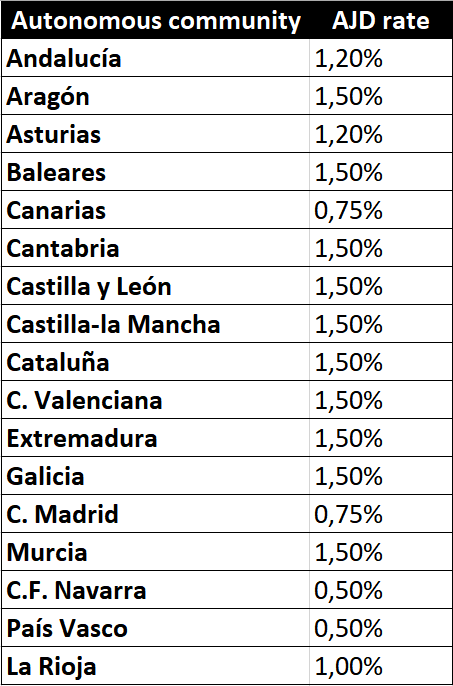
AJD (Stamp duty tax): This is a tax levied by the autonomous community in which the property is located and its taxation depends on it. The following table shows the different rates at the time of writing this article:
In special cases, such as for disabled people, large families or people under 35 years of age, some autonomous communities apply reduced AJD rates. If you are looking for a property, at RE/MAX Beach Homes we will be happy to assist you with all the issues involved in buying a property, and of course to help you find the most suitable one for your needs.
Property resales:
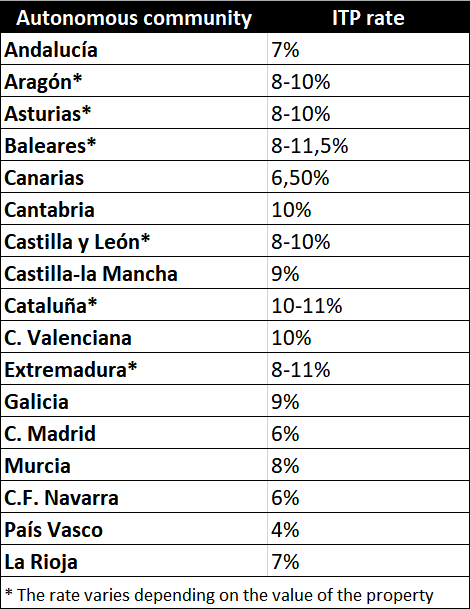
ITP (Property transfer tax): Like stamp duty tax, it depends on the autonomous community in which the property is located. Until 31 December 2023, the purchase value was used as tax base to calculate the ITP, but this situation changed from 2022 with the introduction of the new «Reference Value» by the Dirección General del Catastro (General Directorate of Cadastre). From this year it is the tax base for the calculation of other taxes in addition to the ITP such as Inheritance Tax, Wealth Tax, Income Tax or Municipal Capital Gains Tax. You can check the cadastral value of a property on the Cadastre website (you must identify yourself digitally). At the time of publication of this text it is as follow
As with stamp duty tax, in special cases some autonomous communities apply reduced rates of the Property transfer tax. Also as in the previous case, the reference value of the land registry is used as the basis for its calculation.
Other expenses:
The sale and purchase of a property entails other expenses apart from taxes and which are borne by the buyer:
Notary fees: Although in Spain it is legal to carry out a sale and purchase with a private contract, it is highly advisable to opt for the purchase before a notary to avoid problems. Notary fees depend basically on the amount of the transaction, the number of pages of the deed and the number of copies of the same, so it is not possible to know in advance the exact notary fees, but it is usually a value between 0,5 and 1% of the price of the property.
Land registry: The land registry is a public institution with the function of certifying the legal conditions of a property. It is the best guarantee that an owner can have to prove the ownership of a property to third parties. The registry fee is based on the value of the property and is governed by tables. It is usually between €150 and €400.
Agency commission: Some agencies charge a commission to the buyer and, although it may be a fixed price, it is usually a percentage of the purchase price, normally 3%. This commission is hidden from the buyer, it is not reflected in the advertised sale price, so we advise you to always ask the agency if they charge this commission. At RE/MAX Beach Homes we do not pass on any commission to the buyer and the price we advertise is the final price, with no hidden agency commissions.
Lawyer/Administration: It is highly recommended to hire a lawyer to audit and manage the purchase of a property. Although the land registry informs about the legal situation in terms of mortgages, charges, usufructs, etc., there are circumstances that sometimes owners do not communicate nor they legally register, such as extensions of the built area that must be legalised to avoid problems in the future. On the other hand, non-resident buyers in Spain, need to obtain a NIE, pay taxes and register the property in the land registry so the hiring of a lawyer is doubly recommended in these cases.
Una de las preguntas más frecuentes realizadas por los compradores de vivienda es cuáles son los gastos añadidos al precio de compraventa. Para poder explicarlos, debemos separar entre compras de vivienda de obra nueva y de segunda mano, ya que su tributación es diferente:
Obra nueva:
IVA (Impuesto del valor añadido): 10% del valor de compraventa. Por ejemplo, para una vivienda con un precio de 200.000 €, el IVA sería de 20.000 €.
AJD (Actos Jurídicos documentados): Es un impuesto que recauda la comunidad autónoma en la que se encuentra el inmueble y su tributación depende de ésta. En la siguiente tabla se encuentran los diferentes tipos en el momento de escribir este artículo:
En casos especiales como en el de personas discapacitadas, familias numerosas o menores de 35 años, algunas comunidades autónomas aplican tipos reducidos de AJD. Si está buscando una vivienda, en RE/MAX Beach Homes estaremos encantados de asistirle con todas las cuestiones que plantea la compra de una propiedad, y por supuesto de ayudarle a encontrar la más adecuada para sus necesidades.
Viviendas de segunda mano:
ITP (Impuesto de transmisiones patrimoniales): Depende, al igual que los actos jurídicos documentados, de la comunidad autónoma en la que se encuentre el inmueble. Hasta el 31 de diciembre de 2021, se utilizaba el valor de la compraventa para calcular el ITP, pero esta situación cambió a partir de 2022 con la introducción del nuevo “Valor de referencia” por parte de la Dirección General del Catastro. Desde este año es la base para el cálculo de otros impuestos además del ITP como el de Sucesiones y Donaciones, Impuesto de Patrimonio, IRPF o Plusvalía Municipal. Puede consultar el valor catastral de una vivienda en la web del catastro (es necesario identificarse digitalmente). En el momento de publicación de este texto es la siguiente:
Al igual que con el AJD, en casos especiales algunas comunidades autónomas aplican tipos reducidos de ITP. También como en el caso anterior, se utiliza como base para su cálculo el valor de referencia del catastro.
Otros gastos:
La compraventa de una vivienda conlleva otros gastos aparte de los impuestos y que corren a cargo del comprador:
Notaría: Aunque en España es legal realizar una compraventa con un contrato privado, es altamente recomendable optar por realizar la compra ante notario para evitar problemas. Los gastos notariales dependen básicamente de la cuantía de la operación, del número de páginas de las escritura y del número de copias de la misma por lo que no es posible conocer de antemano con exactitud los gastos notariales, pero suele ser un valor entre el 0,5 y el 1% del precio de la propiedad.
Registro de la propiedad: El registro de la propiedad es una institución pública con la función de dar fe de las condiciones legales de un inmueble. Es la mejor garantía que puede tener un propietario para acreditar la titularidad de un inmueble ante terceros. La tarifa del registro va en función del valor de la propiedad y se rige por unas tablas. Suele ser de entre 150 y 400 €.
Comisión de la agencia: Algunas agencias cobran comisión al comprador y, aunque puede ser un precio fijo, suele ser un porcentaje del precio de compraventa, normalmente un 3%. Esta comisión se oculta al comprador, es decir, no está reflejada en el precio de venta publicitado, por lo que le aconsejamos que siempre pregunte a la agencia si cobra esta comisión. En RE/MAX Beach Homes no repercutimos ninguna comisión al comprador y el precio que publicitamos es el precio final, sin comisiones de agencia ocultas.
Abogado/Gestoría: Es muy recomendable contratar a un abogado para auditar y gestionar la compra de una vivienda. Aunque el registro de la propiedad informa sobre la situación legal en cuanto a hipotecas, cargas, usufructos, etc., hay circunstancias que a veces los propietarios no comunican ni registran legalmente como ampliaciones de la superficie construida que deben legalizarse para evitar problemas en el futuro. Por otra parte, los compradores no residentes en España, necesitan obtener un NIE, pagar impuestos e inscribir la propiedad en el registro de la propiedad por lo que la contratación de un abogado es doblemente recomendada en estos casos.
Playa Flamenca is a residential area located in the south of the province of Alicante, close to bigger towns such as Torrevieja or Alicante (in the north), or Pilar de la Horadada, San Pedro del Pinatar or Cartagena (in the south). It belongs to Orihuela Costa, which is a district of Orihuela, and borders with La Zenia to the south and with Villamartín urbanization to the west. Playa Flamenca is located near two international airports: Alicante-Elche Miguel Hernández, 45 minutes away, and Region of Murcia, 40 minutes away. It also has a very good road connection with the beaches and areas of tourist interest on the Costa Blanca.
It is surrounded by all kinds of services such as restaurants, bars and supermarkets. Just 1km away is the Zenia Boulevard Shopping Center, the largest shopping center in the province of Alicante, with an area of 160.000 m², 5.000 parking spaces, 150 stores where we can find the main brands in fashion for men, women and children, sports, footwear, perfumery, food, telephone, accessories, home, bricolage, jewellery, toy store, pet shop, etc.
In 2020, the residential had around 1.700 inhabitants, the majority being British, German, Belgian and Scandinavian.
BEACHES
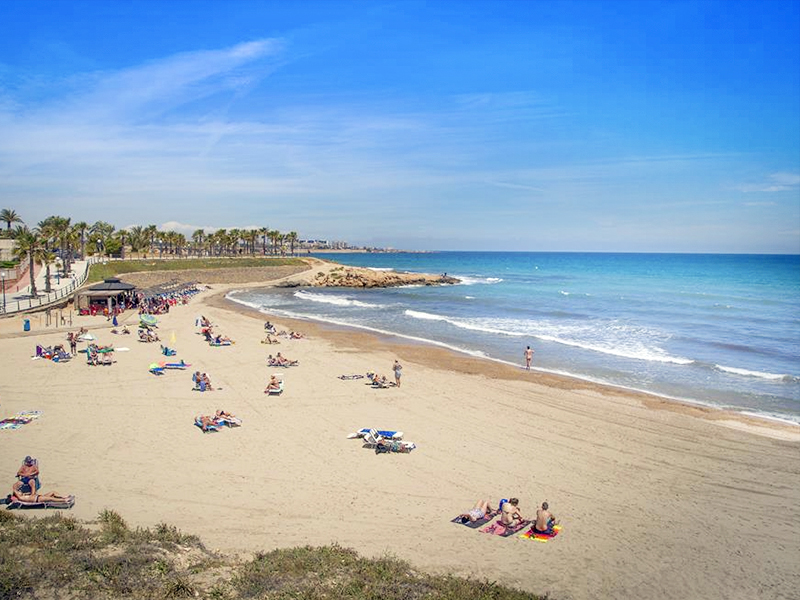
Playa Flamenca has two beaches, La Mosca and La Estaca, both holders of the Blue Flag badge since 1992 and the Q for «Tourist Quality» awarded by the Ministry of Tourism since 2014:
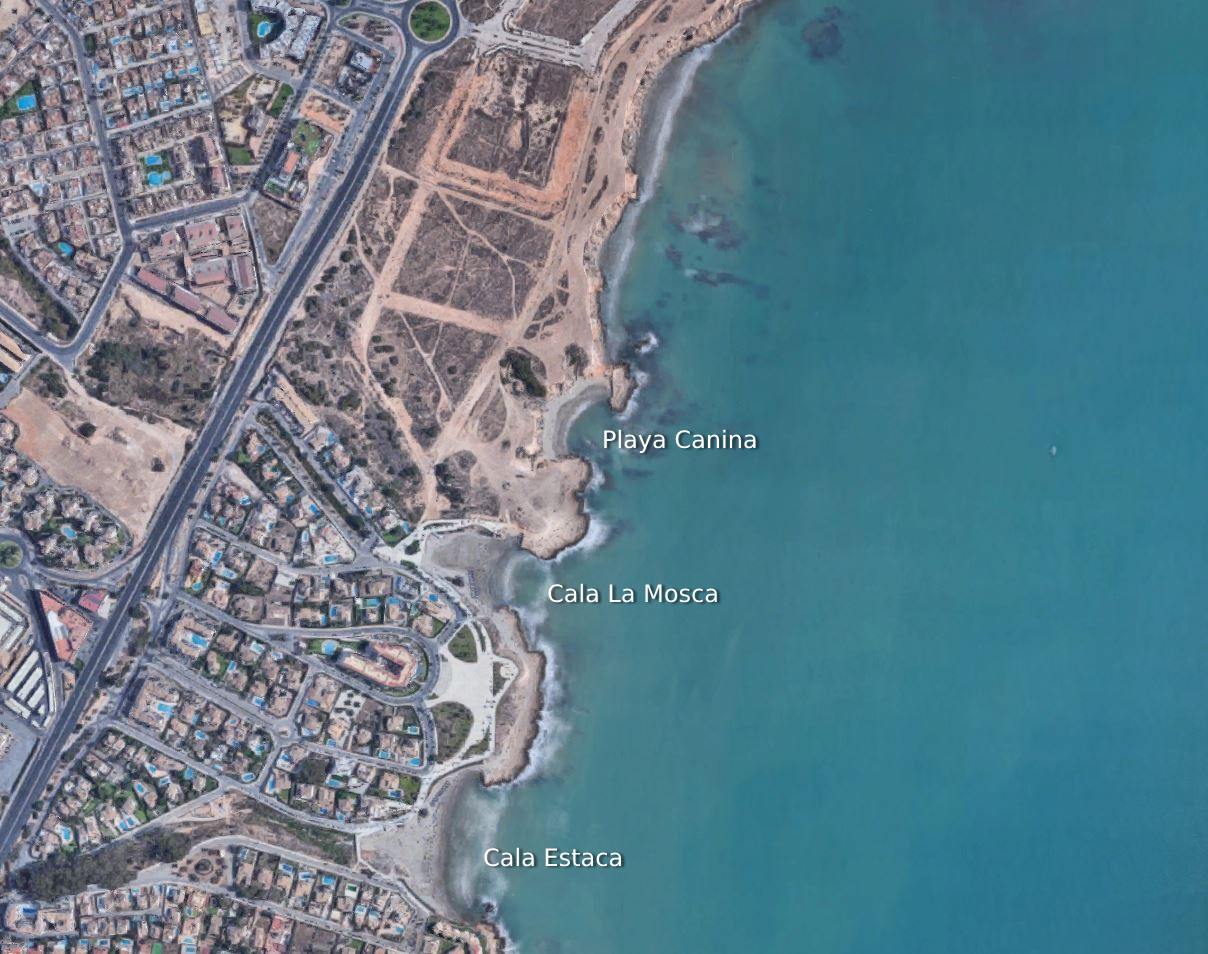
Cala Mosca: is a small cove of golden sand, 70 meters long, sheltered by rock formations and a large sand surface of 6.279 m², perfect for carrying out beach activities. It borders in the north with Punta Prima and in the south with Cala Estaca and is accessible from the N-332 road.
Cala Estaca: located just a few meters away, has a length of 224m and an area of 6.778 m². It limits to the north with Cala Mosca and to the south with Cal Cerrada (La Zenia). Like Cala Mosca, it has golden sand and is accessible from the N-332 road. Both coves are joined by the Playa Flamenca promenade, which has an original sundial and continues to Cala Capitán.
COMMUNICATIONS
Bus lines
During the whole year, Playa Flamenca has two bus services from Costa Azul company that connect it with the rest of the Orihuela Costa urbanizations and with the Torrevieja bus station, from where many connections can be made with other cities in Spain. You can access all the information on the lines in the service app or in the following links:
Train station
A few kilometers from Playa Flamenca is located the Orihuela train station, which has both conventional and high-speed train services, making the Orihuela-Madrid journey possible in less than two and a half hours. Orihuela’s urban and interurban bus services are also located at the station.
Airport
Alicante Airport (IATA: ALC), (officially Alicante-Elche Miguel Hernández Airport), is the 5th busiest airport in Spain after the airports of Madrid-Barajas, Barcelona, Palma de Mallorca and Málaga-Costa del Sol and it ranks among the 50 busiest within Europe. It is located about 45 minutes from Playa Flamenca by car and a bus service connects it to the center of Alicante every 20 minutes. Link with information: https://www.alicanteturismo.com/en/public-transport/
ENVIRONMENT
Playa Flamenca is a privileged environment for its tranquility and has a wide range of bars, restaurants, supermarkets, schools and services. The Zenia Boulevard Shopping Center, the largest in the province of Alicante, is located a few minutes from Playa Flamenca. There are 150 shops there and it holds regular activities and concerts for the whole family. The Playa Flamenca area is located in one of the best and most important golf areas in the Mediterranean with five excellent golf courses of recognized international prestige: Campo De Golf Villamartín, Club De Golf Las Ramblas, Real Club De Golf Campoamor, Las Colinas Golf & Country Club and Vistabella Golf.
Playa Flamenca has around 6 km of bicycle lanes from Campoamor to Punta Prima, which allow anyone to enjoy the area while having a bicycle ride with the safety offered by this exclusive route for cyclists.
Playa Flamenca has a wide range of restaurants ( The Lobster and Surfers Bar & Grill stand out), pubs with live shows and supermarkets from large chains such as Carrefour, Lidl or Mercadona. In addition, every Saturday from 9 a.m. to 2 p.m., a street market takes place on the street Pintor Ribera, where you can find all kinds of products at a good price.
Playa Flamenca es un residencial situado al sur de la provincia de Alicante, a poca distancia de localidades de mayor tamaño como Torrevieja o Alicante (hacia el norte), o Pilar de la Horadada, San Pedro del Pinatar o Cartagena (hacia el sur). Pertenece a Orihuela Costa, que es una pedanía de Orihuela, y limita con La Zenia al sur y al oeste con la urbanización de Villamartín. Playa Flamenca se ubica cerca de dos aeropuertos internacionales: el de Alicante-Elche Miguel Hernández a 45 minutos y el de Región de Murcia a 40 minutos. Además tiene una muy buena conexión por carretera con las playas y zonas de interés turístico de la Costa Blanca.
Está rodeada de todo tipo de servicios como restaurantes, bares y supermercados. A tan solo 1km se encuentra el Centro Comercial Zenia Boulevard, el mayor centro comercial de la provincia de Alicante, con una superficie de 160.000 m², 5.000 plazas de aparcamiento, 150 tiendas donde podemos encontrar las principales marcas en moda hombre, mujer y niños, deporte, calzado, perfumería, alimentación, telefonía, complementos, hogar, bricolaje, joyería, juguetería, tienda de animales, etc.
En 2020, la urbanización contaba con alrededor de 1700 habitantes, la mayoría británicos, alemanes, belgas y escandinavos.
PLAYAS
Playa Flamenca cuenta con dos playas llamadas La Mosca y La Estaca, ambas poseedoras del distintivo de Bandera Azul desde del año 1992 y de la Q de “Calidad Turística” otorgada por el Ministerio de Turismo desde 2014:
Cala Mosca, es una pequeña cala de arena dorada de 70 metros de longitud y resguardada por formaciones rocosas y con una gran superficie de arena de 6.279 m², perfecta para la realización de actividades. Limita al norte con Punta Prima y al sur con Cala Estaca y es accesible desde la carretera N-332.
Cala Estaca: ubicada a tan solo a unos metros, tiene una longitud de 224m y una superficie de 6.778 m2. Limita al norte con Cala Mosca y al sur con Cal Cerrada (La Zenia). Al igual que Cala Mosca su arena es dorada y es accesible desde la carretera N-332.
Ambas calas y están unidas por el paseo marítimo de Playa Flamenca que continúa hasta Cala Capitán y en el que se encuentra un original reloj solar.
COMUNICACIONES
Líneas de autobús
Playa Flamenca cuenta durante todo el año dos líneas de autobuses de la compañía Costa Azul que la comunican con el resto de urbanizaciones de Orihuela Costa y con la estación de autobuses de Torrevieja, desde donde se pueden realizar multitud de conexiones con otras ciudades de España. Se puede acceder a toda la información de las líneas a través de la app del servicio o de los siguientes enlaces:
Estación de tren
A pocos kilómetros de Playa Flamenca se encuentra la estación de tren de Orihuela, que cuenta tanto con líneas de tren convencional como de alta velocidad, haciendo posible el trayecto Orihuela-Madrid en menos de dos horas y media. En la estación también se encuentran los servicios de autobuses urbanos e interurbanos de Orihuela.
Aeropuerto
El Aeropuerto de Alicante (IATA: ALC), (oficialmente Aeropuerto de Alicante-Elche Miguel Hernández), es el 5º aeropuerto más transitado de España tras los aeropuertos de Madrid-Barajas, Barcelona, Palma de Mallorca y Málaga-Costa del Sol y se sitúa entre los 50 de mayor tránsito dentro de Europa. Está situado a unos 45 minutos de Playa Flamenca en coche y una línea de autobús lo conecta con el centro de Alicante cada 20 minutos. Enlace con información: https://www.alicanteturismo.com/transporte-publico/
ENTORNO
Playa Flamenca tiene un entorno privilegiado por su tranquilidad y cuenta una gran oferta de bares, restaurante, supermercados, colegios y servicios. El Centro Comercial Zenia Boulevard, el más grande de la provincia de Alicante, está situado a unos pocos minutos de Playa Flamenca. En él se encuentran 150 locales y regularmente se realizan actividades y conciertos ideales para toda la familia. El área de Playa Flamenca está situada en una de las mejores y más importantes ofertas de golf del Mediterráneo con cinco excelentes campos de golf de reconocido prestigio internacional: Campo De Golf Villamartín, Club De Golf Las Ramblas, Real Club De Golf Campoamor, Las Colinas Golf & Country Club y Vistabella Golf.
Playa Flamenca cuenta con unos 6 km carril bici que se extienden desde Campoamor hasta Punta Prima, que permiten disfrutar de la zona a la vez que se disfruta de un paseo en bicicleta con la seguridad ofrecida por esta vía exclusiva para ciclistas.
La zona cuenta además con los siguientes puertos deportivos:
Playa Flamenca cuenta con una amplia oferta de restaurantes, entre los que destacan The Lobster y Surfers Bar & Grill, pubs con espectáculos en directo que así como establecimientos de grandes cadenas de supermercados como Carrefour, Lidl o Mercadona. Además, cada sábado de 9 a 14 horas tiene lugar en la calle C. Pintor Ribera un mercadillo en el que se pueden encontrar todo tipo de productos a buen precio.
¿Quieres recibir en tu email las últimas noticias y novedades sobre nuestros inmuebles?